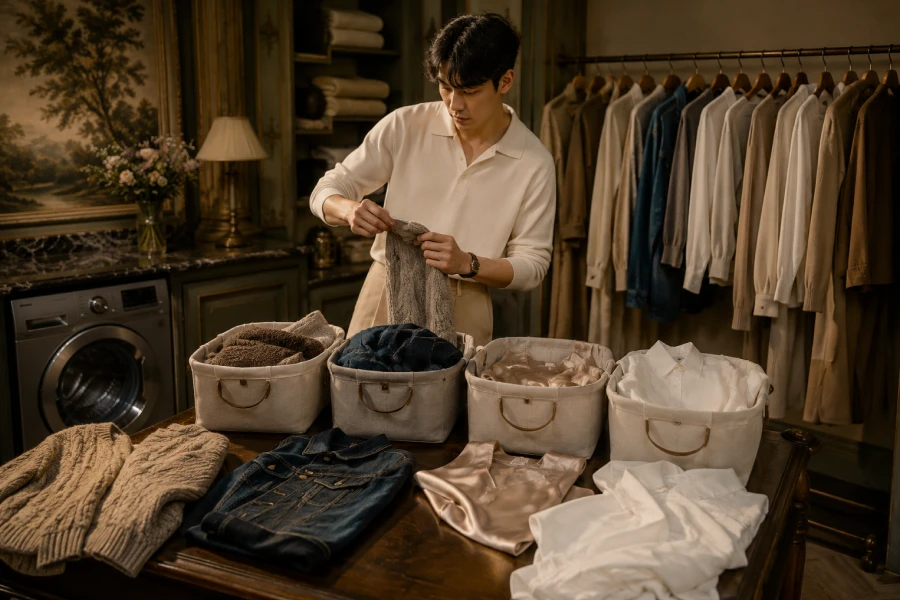
Laundry becomes simpler once fabric, not habit, guides the decision. how to wash clothes by fabric helps explain why one setting cannot serve every garment equally well. Cotton, denim, silk, wool, and performance materials all respond differently to water, heat, and friction. That does not mean you need a complicated routine. It means a few basic categories can prevent avoidable wear. Begin by reading the label before assuming the item belongs in a familiar load. Notice the fabric blend, trim, and construction. These details affect what the garment can handle. Small adjustments can preserve shape and color for far longer. Fabric awareness makes laundry more precise without making it difficult.
Care labels are not designed to make laundry feel fussy. They offer the garment’s most useful starting instructions. Look for water temperature, drying limits, and warnings about bleach or ironing. Notice whether the piece includes a lining, stretch fibers, or decorative trim. The fabric-care label reading habit helps you avoid treating every item like a basic tee. If the instructions seem unclear, choose the gentler option first. You can always adjust later if necessary. The label is especially important for new garments before you learn their behavior. A quick glance can protect a piece through many future washes. Knowledge saves more time than repair.
Cotton is forgiving, but it still benefits from sensible temperature choices. Lighter cottons may fade or shrink when washed too hot. Denim can lose color and stiffness when washed too frequently. Turn darker denim inside out and give it room in the load. Consider air-drying jeans when you want to preserve their shape. The everyday fabric washing method works best when you do not over-clean sturdy items. A shirt that has only been worn briefly may only need airing. Washing less often can protect fibers and reduce fading. Care is not always about doing more. Sometimes it means knowing when to do less.
Delicate fibers require lower friction and more patience. Silk can react badly to rough agitation and high heat. Wool can shrink or felt when it is handled too aggressively. Use cool water and a suitable gentle cycle when the label allows it. Place fine items in a mesh bag if that gives extra protection. The delicate fabric care approach also includes drying with intention. Lay wool flat so gravity does not stretch it. Keep silk away from direct harsh heat. A little patience protects the elegant feel that makes these fibers special. The result is useful long after the first attempt.
Synthetic fabrics often dry quickly, but they can hold odor and respond poorly to excessive heat. Athletic pieces, swimwear, and stretch garments usually need gentler settings. Avoid fabric softener when it may leave a coating on performance fibers. Wash these items soon after intense use when possible. Keep them away from rough surfaces and heavy hardware. Heat can weaken elastic components over time. Use a low setting or air-dry when the label supports it. These choices help the garment keep its function and shape. Synthetic does not mean indestructible. It simply has different care priorities.
Load planning matters because garments touch each other throughout the wash. Keep heavy pieces away from fragile fabrics. Separate towels from lint-sensitive clothing. Avoid overfilling the machine so water and detergent can move properly. Group items by both color and weight when possible. This reduces friction and helps everything clean more evenly. Think about zippers, hooks, and rough trims before adding delicate pieces. Small preparations prevent snags and pulled threads. A balanced load protects clothing better than an overloaded one. It also makes drying and folding easier afterward. Good laundry design starts with what shares the drum.
The finish should match the fabric as carefully as the wash cycle. Shape collars and seams while garments are damp. Fold knitwear after it has dried flat. Hang woven shirts on supportive hangers. Use a low iron setting or steam when the fabric calls for it. Let items cool before folding if heat has been used. This prevents fresh creases from setting immediately. Store seasonal pieces clean and fully dry. These final steps keep the garment ready for the next wear. They also make your closet look more dependable. The best care routine continues beyond the machine.
Fabric-specific laundry is not about perfection; it is about paying attention. Read the label, know the basic needs of common fibers, and plan the load around friction and weight. Treat delicate and stretchy items with less heat and more patience. Let sturdy pieces breathe between unnecessary washes. Finish each garment in a way that respects its construction. These choices help clothes look better, fit better, and last longer. Once the categories become familiar, fabric care feels natural rather than technical. This keeps the process practical rather than precious. Over time, the approach becomes almost automatic. It gives the next decision a clearer starting point.



Leave a comment